APIX Biosciences
APIX Patties – Complete Bee Feed – Box of 32
APIX Patties – Complete Bee Feed – Box of 32
7 Tibor Ct
7 Tibor Ct
Logan Village QLD 4207
Australia
A complete pollen replacement, not just a protein supplement. APIX Patties are a ready-to-use feed developed by Belgian company APIX Biosciences, built on more than 25 years of honey bee nutrition research. They give colonies the full range of nutrition they normally get from pollen, so brood rearing keeps going when natural pollen is scarce or missing.
Box of 32 patties.
Bulk pricing
- 1–24 boxes: $299.20 per box (inc GST)
- 25–49 boxes: $274.56 per box (inc GST)
- 50+ boxes: $264.00 per box (inc GST)
Bulk pricing is applied automatically in your cart.
Why APIX Patties?
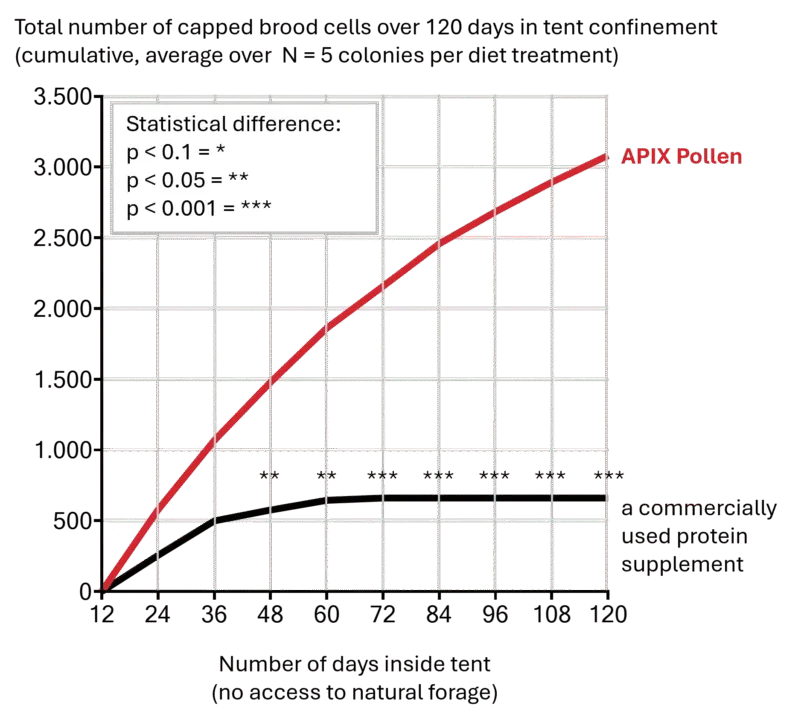
- Proven to keep brood going with zero pollen – in tent trials, colonies on APIX bee pollen patties raised healthy brood for a full 120-day season, while colonies on a leading commercial protein supplement stopped rearing brood within 30–40 days.
- Better winter survival – multi-year US field trials with commercial beekeepers showed around 50% lower winter losses compared with standard protein patties.
- Stronger colonies – more frames of bees in early spring and more colonies meeting pollination grade.
- Efficient feed – colonies turned APIX Patties into brood far more efficiently than a commercial pollen substitute.
- Balanced omega-3 and omega-6 – patent-protected formula with the sterols bees need, including isofucosterol.
- Peer-reviewed science – research published in Proceedings of the Royal Society B, with trials run alongside Washington State University.
When to use it
- Autumn build-up before winter, and early spring as colonies come out of winter
- Summer dearths and drought, when little is flowering
- Queen rearing, to keep nurse bees well fed
- Pollination of monoculture or low-nutrition crops, and greenhouse/tunnel pollination
- Long spells of cold or wet weather when bees can't forage
How to feed
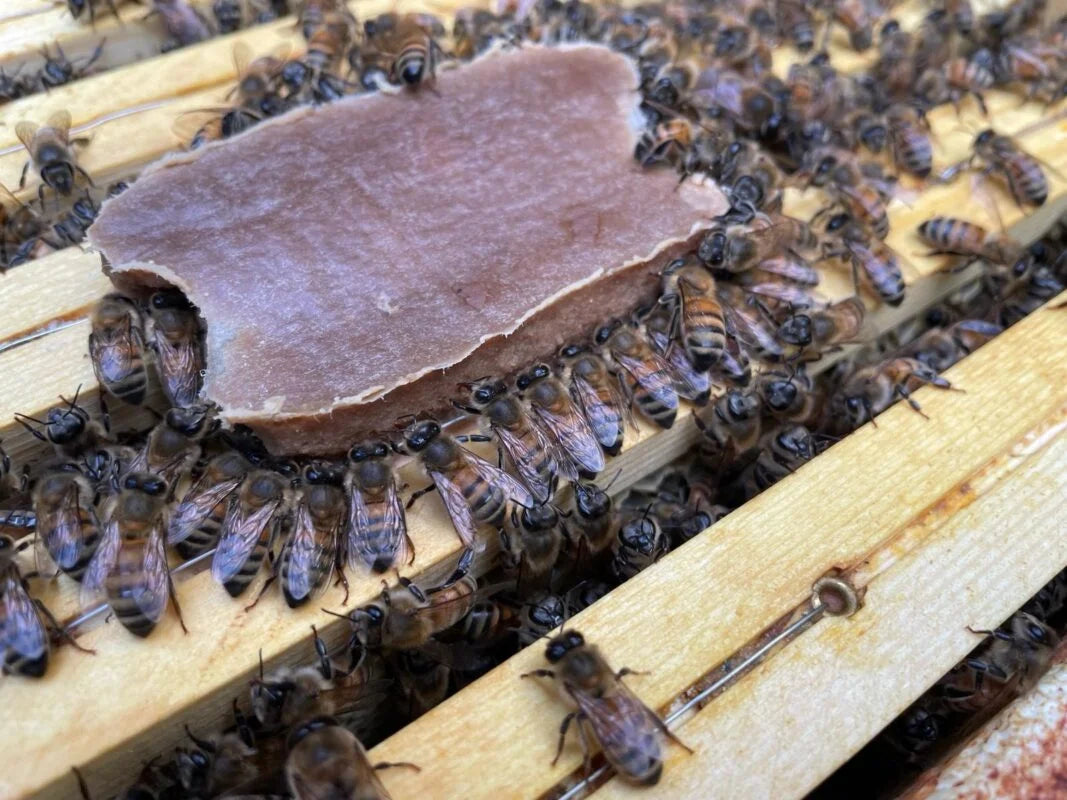
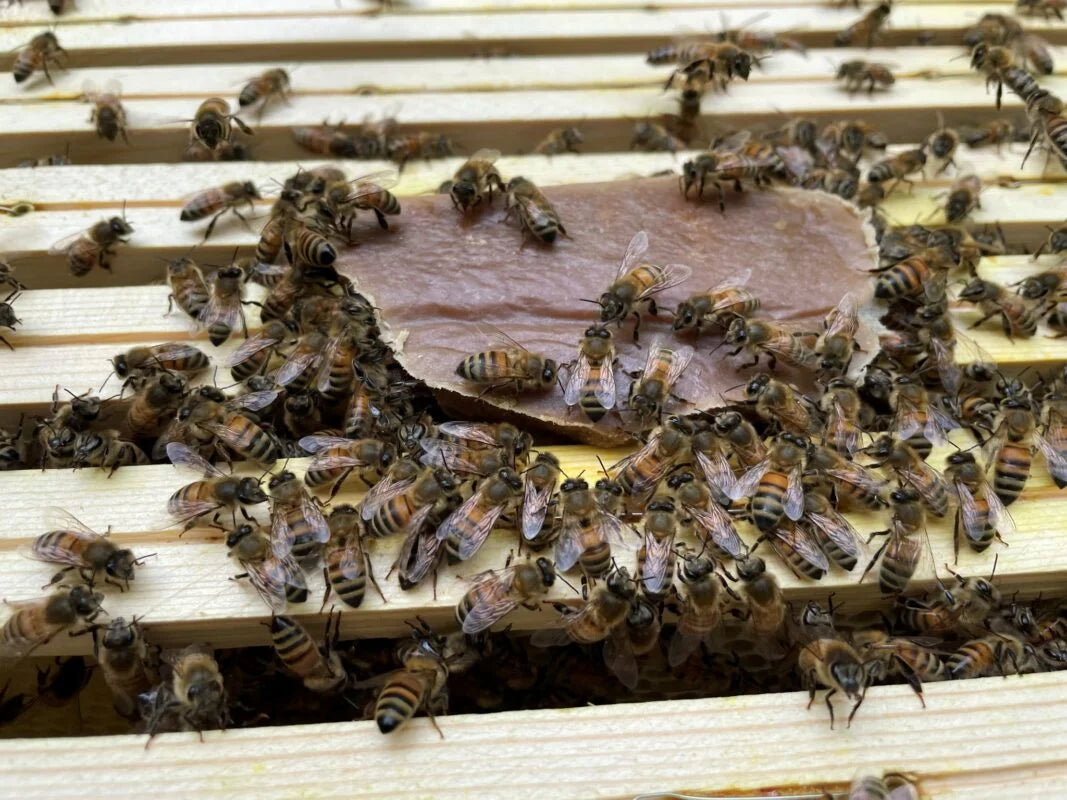
- Place the patty on top of the frames, close to the brood nest, with the perforated paper facing down. Scratch the paper with your hive tool to help the bees get in; for small colonies, remove the paper altogether.
- One patty feeds a brood-rearing colony of about 8 frames of bees for 10–14 days when there's little natural pollen. Use 2 patties for around 16 frames, and adjust for pollen coming in and brood levels.
- Feed consistently – gaps in pollen-like nutrition can lead to brood being cannibalised. Slightly too much is better than too little.
- Don't mix anything into it. Feed sugar syrup separately if needed.
- Feed outside the main honey flow and remove any leftovers before harvesting honey.
- Uneaten feed usually means there's enough natural pollen coming in – or a colony problem worth inspecting (queenless, varroa, nosema).
Good nutrition supports hive health but is not a varroa treatment – keep up your normal mite control. Can be used in areas with small hive beetle; for weaker colonies, feed smaller amounts and remove leftovers.
Storage
Store sealed in the original packaging in a cool, dry place at or below 22°C, out of direct sunlight. Can be refrigerated or frozen. Reseal opened bags. Best used within 12 months of manufacture.
For honey bees only – not for human consumption. Keep away from pets and other animals.
Choose options